the bread project: loaf 24

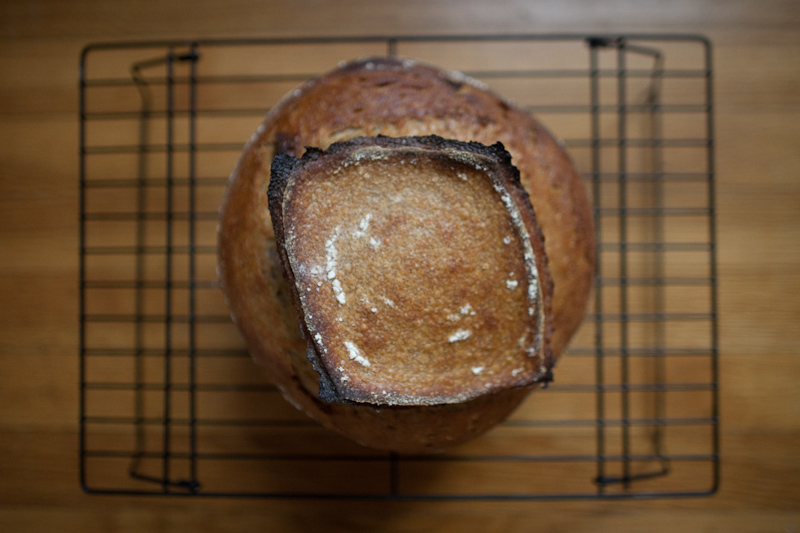
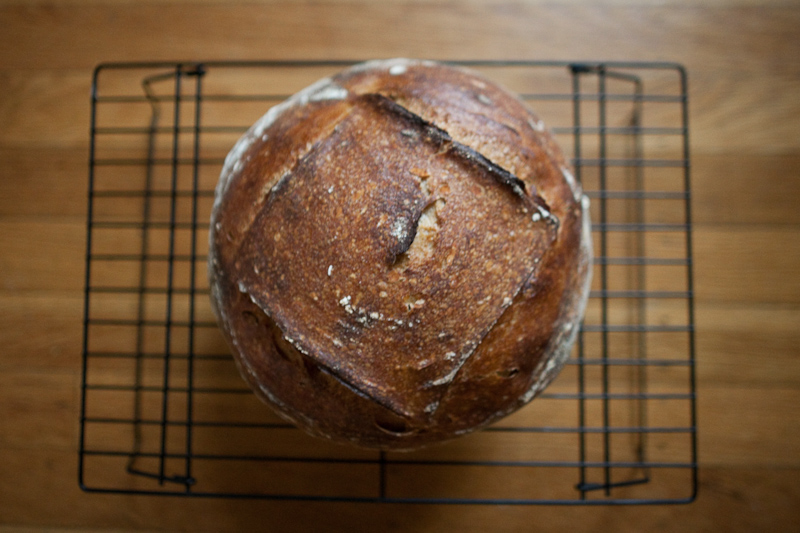
30% rye 10% spelt sourdough loaf, top view

As some of you know, I’ve been trying to bake a lot of bread.  I’m experimenting with the idea of creating a bread diary.  This is loaf #24, a 30% rye 10% spelt and the rest white King Arthur bread flour loaf with a sourdough starter.  hydration was about 68%.

30% rye 10% spelt sourdough loaf, top viewTop view – kinda funky ears.  slashing could be improved


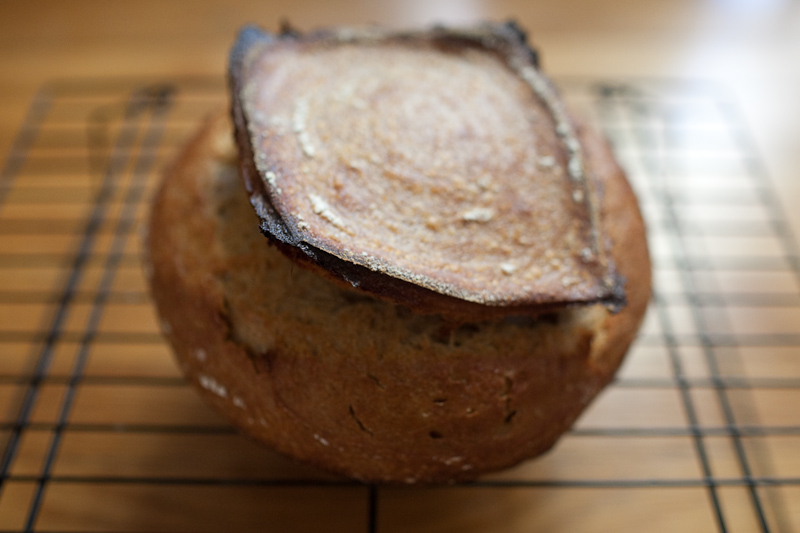
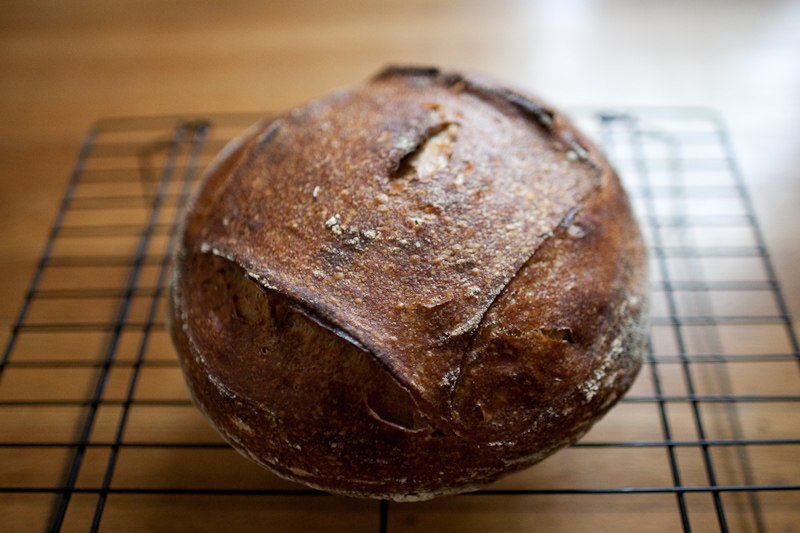
30% rye 10% spelt sourdough loaf3/4 view of the loaf


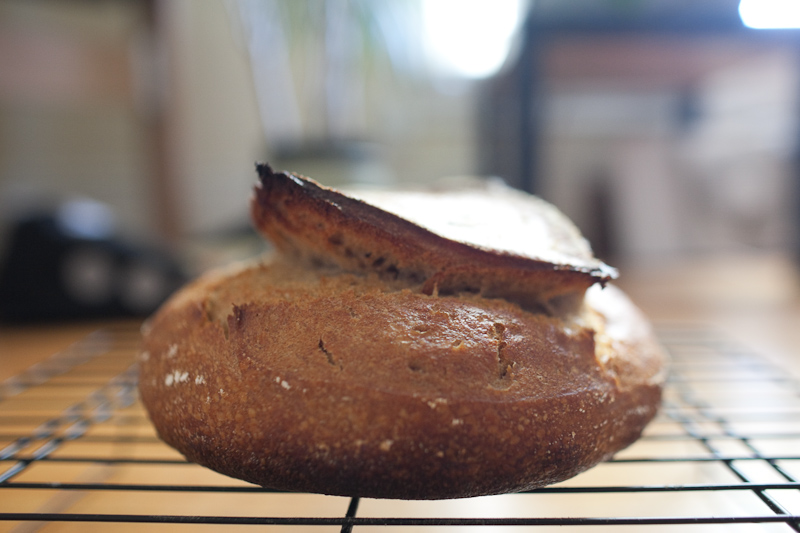
30% rye 10% spelt sourdough loaf, side viewside view.  Didn’t rise as high as I’d like because I had this loaf retarding in the fridge for 4 days.  Better flavor though..


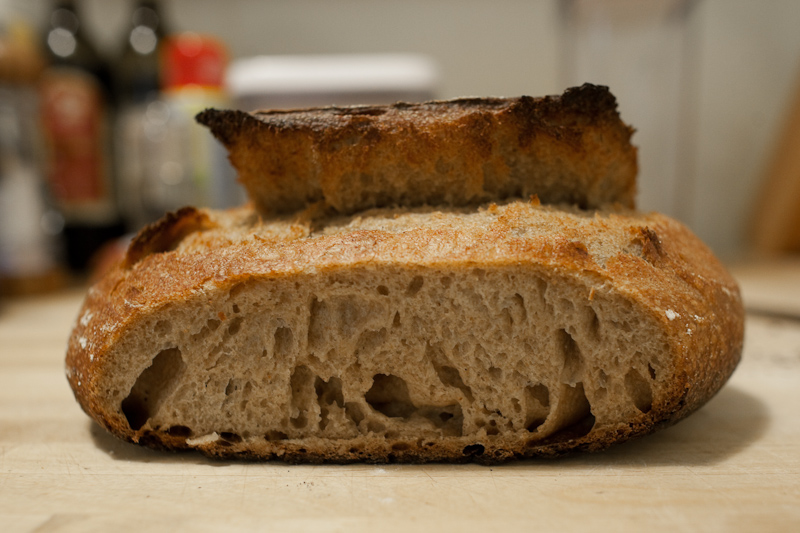
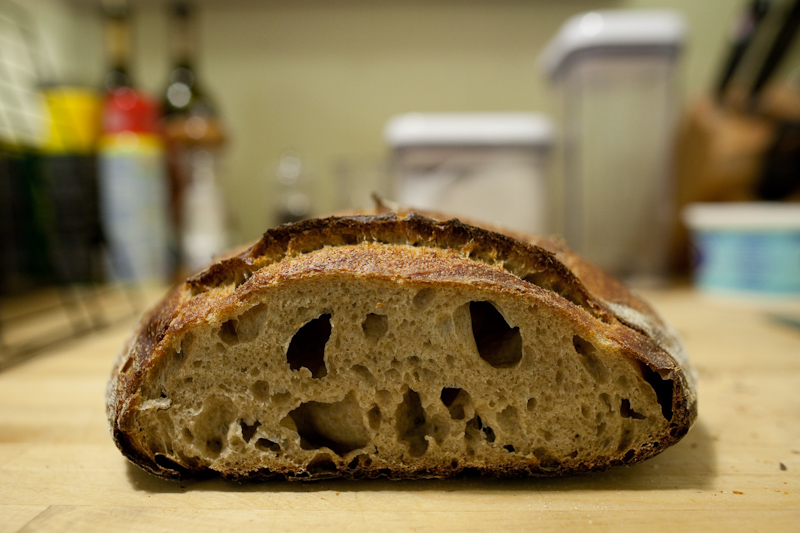
30% rye 10% spelt sourdough loaf, crumbsome big holes at the base.  gigantic ear on top.  Tasted great.


Bread and dough troubleshooting guide and table

Here's a bread and dough (works for pizza dough too) troubleshooting guide, culled from a variety of sources.  I hope to continually update this as I learn more in my quest to make great artisan bread.

Category Amount Effects More information
kneading under-kneading Dough is floppy and loose, tears easily, looks shaggy. Lack of oven-rise, dense texture.  Gluten has not become elastic enough.  Windowpane test fails because the dough doesn't have the strength to stay together. http://www.thekitchn.com/thekitchn/tips-techniques/bread-baking-clinic-underkneading-overkneading-157484
kneading adequate kneading Dough is elastic but not too tight.  Windowpane test success - you can stretch a small portion of the dough thin enough so that you can almost see through it, like a translucent window. http://www.thekitchn.com/thekitchn/tips-techniques/bread-baking-clinic-underkneading-overkneading-157484
kneading over-kneading Dough is dense and tough and tears easily.  The gluten is so tight that it has little give.  Windowpane test fails because you have to pull so hard you tear the dough. http://www.thekitchn.com/thekitchn/tips-techniques/bread-baking-clinic-underkneading-overkneading-157484
hydration ratio (aka water to flour ratio, or baker's percentage) low hydration (<60% or so)not enough water! Dough is crumby, craggy, and really hard to work with.  It doesn't stick together when you work with it.  When baked, small, tightly-formed cells in crumb.  This may be desirable in some cases, such as for bagels.  Add more water to fix this.  My own hydration experiment for bagels
hydration ratio (aka water to flour ratio, or baker's percentage) medium hydration Dough is easy to work with but not too sticky.  Note: Some flours, like rye flour, are just sticky by nature.  
hydration ratio (aka water to flour ratio, or baker's percentage) high hydration (>70% or so)too much water! Dough is floppy and sticky and hard to shape.  Large holes will appear in bread when baked (if they don't collapse).  The bread won't rise as much because it will be weaker.  Some breads are supposed to be high hydration - like ciabatta. http://www.pizzamaking.com/pizza_glossary.htmlhttp://www.youtube.com/watch?v=W580u--9poM
rise too little Fails poke test - poke the bread with two fingers.  If the bread rebounds to its original shape then the dough is still too firm.  The bread will be dense and "doughy" - it will smell and tastes like dough.  The loaf will have a light or greyish crust - no Malliard reaction (browning of sugars) occurs because the flour hasn't been broken down.  To fix, make sure the yeast you've used is active and/or let the bread rise for longer or increase the rise temperature (optimal temperature is about 100-110F.  Too much heat will kill your yeast!)  http://www.thefreshloaf.com/node/21628/finger-poke-test-problem
rise just right Passes poke test.  If the hole from the poke rebounds part of the way then proofing is just right.  
rise too much Fails poke test - (the hole does not rebound at all.)  Dough collapses on itself.  There's so much air in the loaf that it cannot hold its weight.  
baking temperature low Lower baking temperatures generally make softer and thinner crusts.  
baking temperature medium Somewhere in between.  
baking temperature hot Higher temperatures generally make crustier loaves.  This means darker and thicker crusts.  Note: to really promote a thick, chewy crust, bake in a dutch oven.  This traps steam near the loaf, which delays crust formation and allows it to get thicker.
salt none or not enough The loaf may look good but it'll taste like cardboard.  It's surprising how much salt enhances the flavor of the bread.  If you realize you've forgotten before you bake, you may be able to make a salty paste and spread it onto the dough while you stretch and fold.  
salt just right The general rule of thumb is to use 2% (baker's percent) salt.  That's 20 grams for each 1000 grams of flour.  Encyclopizza, chapter 4
salt too much Too much salt can inhibit yeast fermentation and may be too salty to taste.  
bake time too short Light crust, doughy and gummy interior.  
bake time just right Bread sounds hollow if you knock it on the bottom.  Nicely browned crust.  The internal temperature will be about 190-210F.  
bake time too long Longer baking times mean a darker crust and a firmer and dryer crumb.  Too much bake time = burny.  
gluten too little Low-gluten breads will not rise well.  The bread won't have the strength to expand when the yeast creates carbon dioxide.  The dough won't stretch well.  
gluten just right Stretchy enough to hold CO2 bubbles without being too taut  
gluten too much If there is too much gluten, the bread won’t be able to expand because the dough will be too tight. The bread will be really chewy and rubbery.  
yeast too little Dough rises really really slowly or not at all.  Your loaf will be dense.  In extreme cases, it'll feel like a brick or a stone.  And the inside will be gross and barely edible. With artisan sourdough breads, this can happen if your starter has died or if you haven't adequately refreshed it.  
yeast just right (1-2% by weight)  http://www.wildyeastblog.com/2008/03/26/bakers-percentage-2/
yeast too much The dough can rise too quickly and collapse back upon itself  

Have questions?  Share them in the comments below.

The last of the Portland photos: Voodoo Donuts, Stumptown Coffee

From another day walking around Northwest:

At Voodoo Doughnuts.  They’ve got a large menu.  It’s so hard to decide.

There’s a mango tango, an old dirty bastard, a portland cream, and an old fashioned glazed.


Cappuccino and a shot of espresso from Stumptown coffee


We stopped by the Saturday winter farmer’s market at Shemanski park to meet some friends.  there were lots of colorful carrots including these white “creme de lite” carrots.


American Dream Bingo in the NW Pearl District.  “Dream More”

Upside down bicycle route sign

A beer at Deschutes Brewery.  I don’t remember which one :(

We ran into some folks on a Brewcycle Portland tour at Deschutes.  Andrea guides this 15-person Crawler Fabrications vehicle between breweries for weekday and weekend mini-tours.

US BanCorp Tower

This is an old Gary Fisher Hoo Koo E Koo bike hooked up to a mill to grind flour at the Portland Homestead Supply Company in the Sellwood district in Southeast Portland.  It still has front fenders and a back rack.

A neat mosaic-y use of reflective tape on the fender and the rim and spokes

A shot of espresso from Blue Kangaroo Coffee Roasters.   I think I had found a recommendation to visit them from chow.com.  It was a decent cafe but I was disappointed with the shot.   The one from stumptown above puts it to shame.

Tilde had some neat items, really nice people, a great window display (shown above) and some beautiful art on the walls.  I was really impressed by Marnie Karger’s hand-cut work that she sells under the named “Crafterall”.

A house in sellwood

We took a little trip to Dairy Creek to finish off the evening.  Here are the pool cues and some of the many beer signs at the dairy creek tavern.

Finally, a bread experiment worth posting about (Loaf #19)

After baking a number of failures (that’s a separate, loooong blog post) this morning I’ve finally baked a sourdough loaf to show off:


20% rye, 10% spelt sourdough loaf.  top view.


from another angle


pretty good crumb.  I’m happy with it at least.

roughly, here was the recipe in terms of bakers percentages:

  • * 20% rye flour
  • * 10% spelt flour
  • * 70% bread flour
  • * 72% hydration
  • * 20% sourdough starter (just all-purpose flour.  the yeast was fairly active)
  • * 2.2% salt

and so I can remember, here was my technique:

  • * mix everything together with the kitchenaid at power setting 2 for ~12 minutes (maybe a bit long but whatever)
  • * put the dough straight in the fridge (I didn’t have time to bake that day!)
  • * take the dough out 2 days later (dough didn’t rise much in the fridge)
  • * let the dough warm to room temperature with the oven on low for 2-3 hours (the dough rose a bit during this time)
  • * fold and shape the loaf
  • * place in bannetton and back into the fridge overnight (~6 hours)
  • * score the loaf
  • * bake at 450F in the lodge dutch oven for 55 minutes straight from the fridge
  • * open the dutch oven and take pictures of the unexpected results